
Tendinopathy: Are You Doing Too Much or Are You Too Weak?
Your tendon feels better when you rest, then flares up when you get active again. Sound familiar? Let’s talk tendinopathy, load and capacity.
Your Achilles hurts, so you stop running.
A few weeks later it feels better. Brilliant.
You go for a run again…and the pain comes straight back.
This is one of the most frustrating things about tendinopathy. Rest can settle the pain because you’ve removed the thing irritating it. But doing nothing doesn’t necessarily improve the tendon’s ability to cope when you start loading it again.
And THAT is where people get stuck.
Tendons don’t hate load. They hate load they aren’t ready for
A tendon connects muscle to bone and is designed to tolerate load.
Walking loads your Achilles. Running loads it more. Sprinting, hills and jumping increase that demand again.
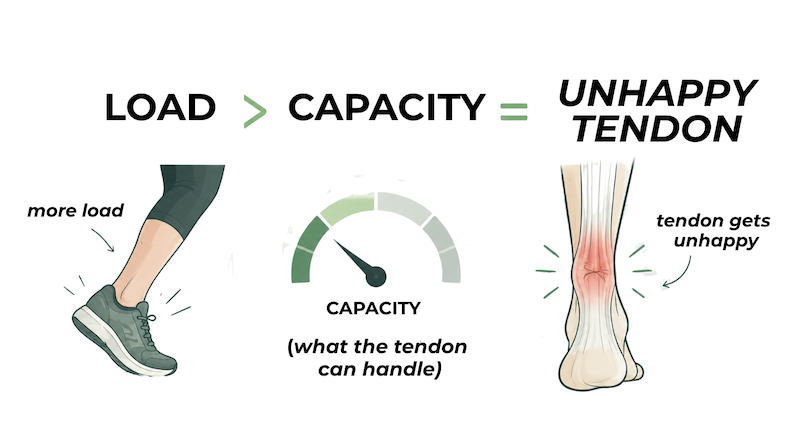
Problems can develop when the load you’re asking a tendon to tolerate is greater than its current capacity.
Think of it like this:
LOAD > CAPACITY = unhappy tendon
And there are two sides to that equation.
You can increase the load too quickly.
Or your capacity can drop because you’ve become weaker or less conditioned.
Sometimes you’ve simply done too much
This is the obvious one.
Imagine you’ve been happily running 15km each week and decide it’s finally time to enter that half marathon.
Suddenly you’re running 30km per week. You’ve added a Sunday long run, hills on Tuesday and a cheeky speed session because a running app told you to.
Your fitness might cope.
Your Achilles might not.
The same thing happens outside running.
You haven’t played tennis all winter, then spring arrives and you’re playing three times a week.
Your basketball pre-season suddenly introduces repeated jumping and sprinting.
You spend an entire weekend gardening after doing very little upper-body exercise for months.
The tendon has suddenly been asked to do much more than it has recently been prepared for.

But sometimes the load hasn’t changed at all
This is the bit people often miss.
“I don’t understand. I haven’t increased my running!”
Fair enough.
But has anything else changed?
Maybe work has been ridiculous for six months and your strength training has disappeared. Maybe you’ve been sick.
Maybe you took six weeks off exercise.
Maybe you’ve gradually become less active without really noticing it.
Your normal 5km run hasn’t changed.
But your body’s ability to tolerate that 5km might have.
This is why we don’t just ask, “What have you done too much of?”
We also want to know:
What aren’t you strong enough to do at the moment?
So, should you rest a sore tendon?
Sometimes reducing the aggravating activity is exactly what we need.
If every 10km run leaves your Achilles significantly more painful the following morning, continuing to smash out 10km runs probably isn’t helping.
But there is a BIG difference between reducing load and removing load completely. If you stop running for six weeks and do nothing else, your pain might settle. Great.
But then you go straight back to running.
Now you’re asking a tendon that has spent six weeks doing very little to suddenly tolerate your old running load again.
And hello, Achilles pain after running again.
Tendon rehab is a bit like turning down the volume
I don’t love the ON/OFF approach.
RUN.
PAIN.
STOP.
REST.
RUN AGAIN.
PAIN AGAIN.
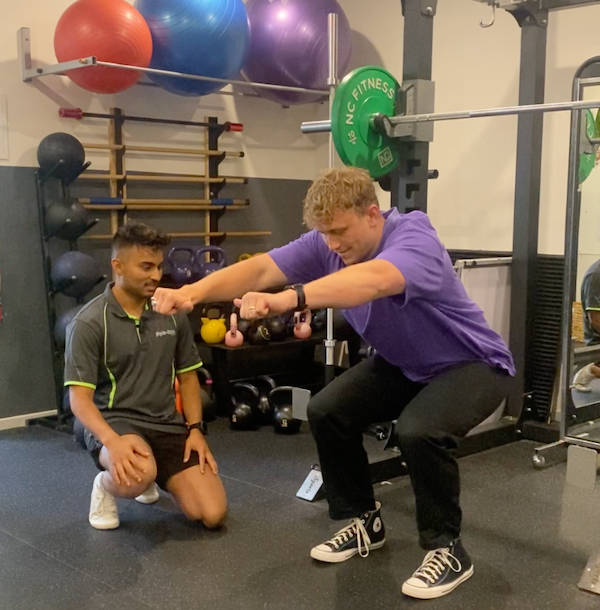
For many tendon problems, we want to find a level of activity the tendon can currently tolerate and build from there.
That might mean temporarily changing your running, gym work, sport or other activity.
At the same time, we need to start improving the tendon and surrounding muscles’ capacity to handle load again.
Exactly what that looks like depends heavily on which tendon is involved and what you need it to do.
An Achilles tendon belonging to a marathon runner needs to tolerate very different forces to an elbow tendon belonging to someone who plays social tennis.
A patellar tendon in a basketballer eventually needs to cope with jumping, landing and changing direction.
A gluteal tendon in someone preparing for a hiking holiday needs to cope with long walks, hills and consecutive days on their feet.
That’s why Googling “three best exercises for tendinopathy” only gets you so far.
Pain isn’t the only thing we’re interested in
Getting your pain down is obviously important.
But if the pain disappears and your tendon still can’t tolerate the activity you want to do, have we really finished the job?
For us, that’s a no.
We want to know why the tendon became overloaded.
We want to know what it can currently tolerate.
And we want to know what you eventually need it to tolerate.
The gap between those two points is where your rehabilitation sits.
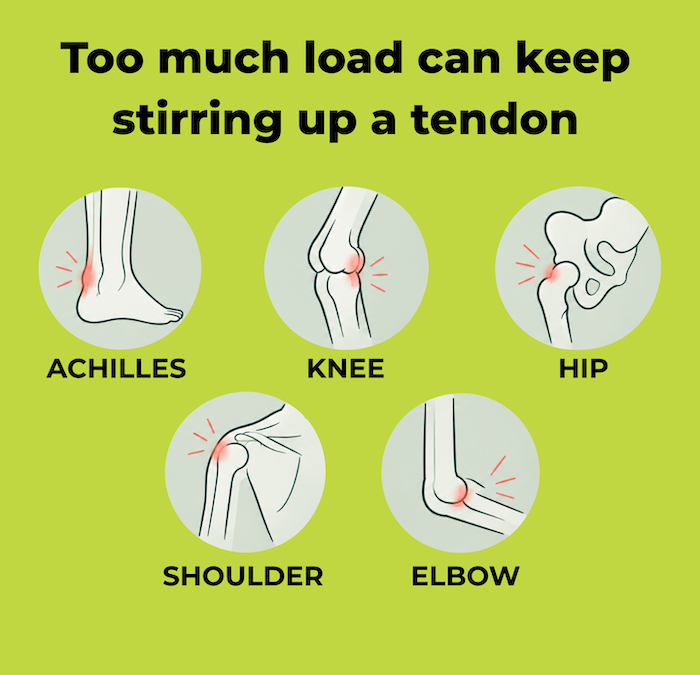
Too much load can keep stirring a tendon up. Doing nothing can leave it underprepared. The clever bit is working out what sits in the middle.
And that is different for everyone.
If you’ve got Achilles, knee, hip, shoulder or elbow pain that settles when you rest but comes straight back when you get active again, it might be worth looking at the load rather than simply resting it again.
This blog was written by Brandon Griffiths, Physiotherapist at Physio & Fitness Clinic, B AppSci / Master of Physiotherapy Practice – La Trobe University.
Brandon has experience across ankles, knees, hips, spine, and sports rehabilitation. With a background in strength & conditioning, he combines hands-on treatment with exercise prescription to help people move better and recover with confidence.
Here at Physio and Fitness Clinic, we offer the best-level care through our physiotherapists and myotherapists. If you have a running injury, make an appointment today with a physio today for physiotherapy and physio run pilates.