
Hypermobility: More Than Just Being Bendy
Learn about hypermobility, EDS and HSD, common symptoms and how personalised physiotherapy can help you manage pain, build strength and improve daily life.
What is Hypermobility?
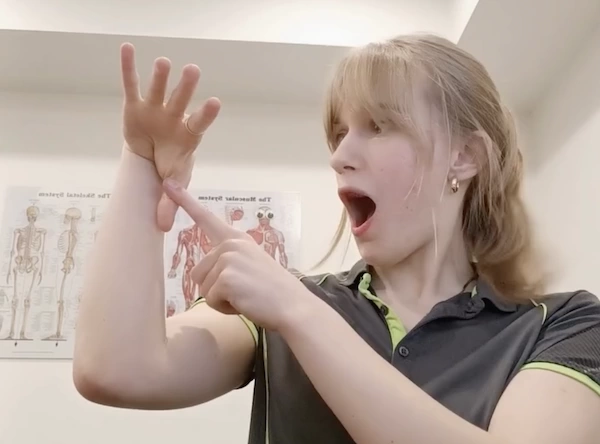
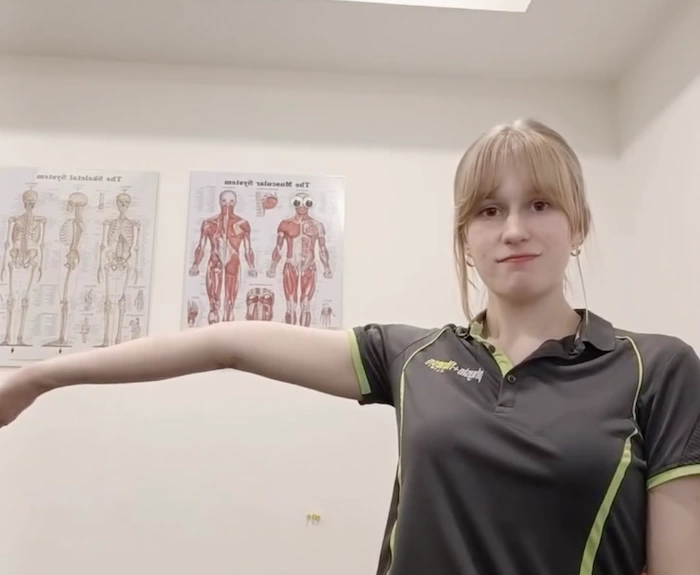
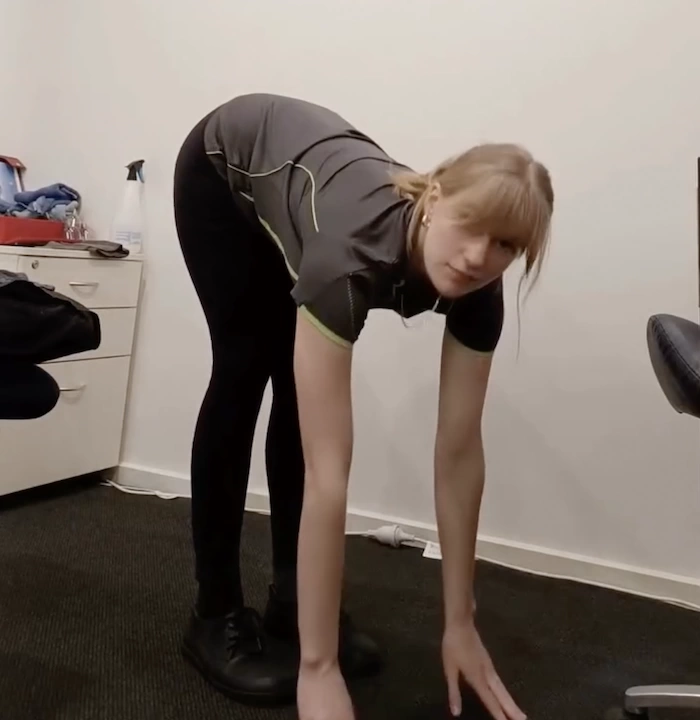
Hypermobility is a medical term used to describe a range of conditions in which a person’s joints move beyond the typical range of motion.
Hypermobility is not necessarily a problem in itself. Many people who are naturally flexible experience no symptoms and do not require treatment.
However, for some individuals, hypermobility can be associated with a range of musculoskeletal, neurological and immunological symptoms that can significantly impact daily life.
Heritable disorders of connective tissue (HDCTs).
These symptoms may be associated with heritable disorders of connective tissue (HDCTs).
The most commonly recognised HDCTs include:
- Ehlers–Danlos syndromes (EDS)
- Marfan syndrome
- Osteogenesis imperfecta
- Stickler syndrome
Similar symptoms can also occur in conditions classified as hypermobility spectrum disorders (HSD). HSD is the diagnostic term used for individuals who experience symptomatic hypermobility that is not explained by another condition and who do not meet the full diagnostic criteria for EDS, including hypermobile EDS (hEDS).
Ehlers–Danlos Syndromes (EDS)
The Ehlers–Danlos syndromes are a group of heritable connective tissue disorders. There are currently 13 recognised EDS subtypes in the 2017 international classification, caused by genetic variants that affect collagen or other components of the extracellular matrix. As collagen is the body’s most abundant structural protein, changes affecting these connective tissue components can lead to a broad range of clinical features.
The currently recognised subtypes are:
- Hypermobile EDS (hEDS)
- Classical EDS (cEDS)
- Classical-like EDS (clEDS)
- Cardiac-valvular EDS (cvEDS)
- Vascular EDS (vEDS)
- Arthrochalasia EDS (aEDS)
- Dermatosparaxis EDS (dEDS)
- Kyphoscoliotic EDS (kEDS)
- Brittle cornea syndrome (BCS)
- Spondylodysplastic EDS (spEDS)
- Musculocontractural EDS (mcEDS)
- Myopathic EDS (mEDS)
- Periodontal EDS (pEDS)
How many people have Hypermobility or EDS?
The overall prevalence of all EDS subtypes has traditionally been estimated at 1 in 5,000, although more recent data suggests a higher prevalence of approximately 1 in 3,100. Prevalence varies considerably between subtypes:
- Classical EDS (cEDS): 1 in 20,000–40,000
- Vascular EDS (vEDS): 1 in 100,000–200,000
- Other subtypes: Fewer than 1 in 1 million
- Hypermobile EDS (hEDS): Accounts for approximately 90% of all EDS cases.
The combined prevalence of hEDS and hypermobility spectrum disorders (HSD) is estimated to be between 1 in 600 and 1 in 900 people, although the individual prevalence of each condition remains uncertain. Experts believe these estimates are likely to be underestimated due to ongoing underdiagnosis, misdiagnosis and delays in recognition
What are some of the symptoms / multi-morbidities of HYPERMOBILITY or EDS?
People with Hypermobility can experience classic MSK symptoms such as:
- Very flexible or “double-jointed” joints
- Joint pain or aching
- Joints that feel unstable or frequently “give way”
- Frequent sprains or injuries
- Muscle fatigue
- Joint subluxations and dislocations
However, Hypermobile people are not Just Bendy
Hypermobility is a whole-person experience, with effects that can extend across the body–brain continuum.
People living with HSD and EDS experience higher rates of fatigue, dysautonomia and mental health challenges. Supporting them requires a holistic approach that recognises the unique presentation, needs and preferences of each person seeking care.
Common Co-Occurring Multimorbidity Conditions Associated With Hypermobility or EDS
Musculoskeletal
- Chronic pain
- Recurrent soft tissue injury
- Early osteoarthritis
- Fibromyalgia
Cardiovascular / Autonomic
- POTS
- Orthostatic intolerance
- Autonomic dysfunction
- Syncope
Gastrointestinal
- Irritable bowel syndrome (IBS)
- Gastro-oesophageal reflux
- Functional dyspepsia
- Constipation
- Bloating
Neurological
- Migraine
- Tension headache
- Small fibre neuropathy
- Dizziness
Mental Health
- Anxiety
- Depression
- Health anxiety
Neurodevelopmental
- ADHD
- Autism
Sleep
- Insomnia
- Poor sleep quality
- Sleep-disordered breathing
- Excessive daytime fatigue
Immune / Allergic
- Allergic rhinitis
- Asthma
- Eczema
- Food allergies
- Urticaria
- Suspected mast cell activation syndrome (MCAS)
Gynaecological / Urogenital
- Urinary incontinence
- Overactive bladder
- Pelvic organ prolapse
- Chronic pelvic pain
- Endometriosis
- Dysmenorrhoea (painful menstruation)
- Heavy menstrual bleeding
- Pelvic pain
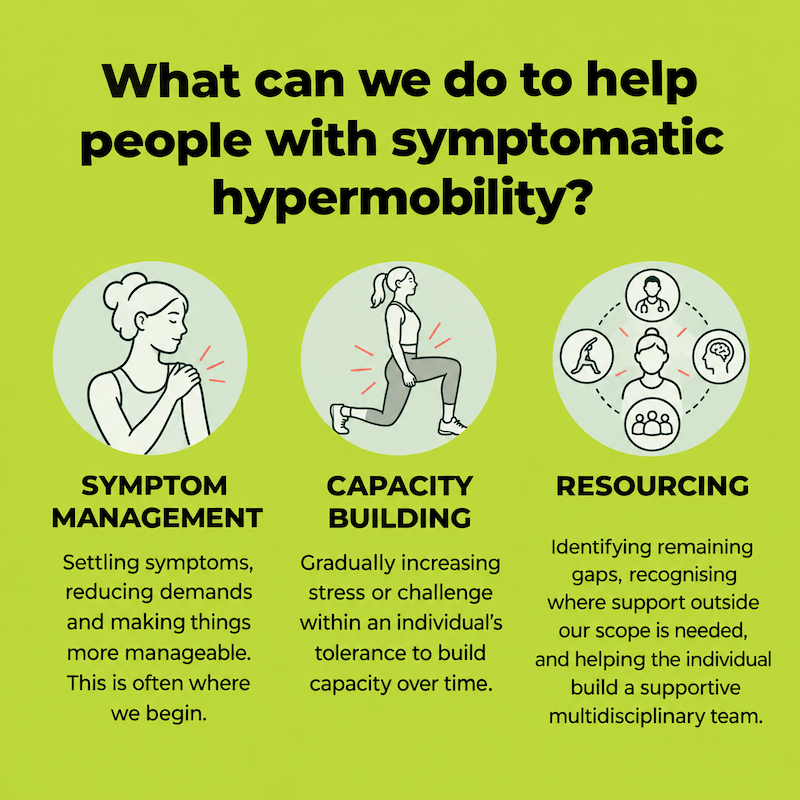
What can we do to help people with symptomatic hypermobility?
Symptom Management: Settling symptoms, reducing demands and making things more manageable. This is often where we begin.
Capacity Building: Gradually increasing stress or challenge within an individual’s tolerance to build capacity over time.
Resourcing: Identifying remaining gaps, recognising where support outside our scope is needed, and helping the individual build a supportive multidisciplinary team.
This blog was written by Luke Waker, the Head of Physiotherapy / Senior Physiotherapist at Physio and Fitness Clinic, B Sc Physiotherapy (hons) – Monash University.
Luke is an Australian trained physiotherapist with over 17 years of experience within the fitness industry. He started his journey as a swim coach and over the years progressed through personal training, group training and then for the past 9 years, has been working as a physiotherapist.
Who can help at PFC with Hypermobility?
Here at PFC, we have our Clinical Lead, Luke Walker who specialises in Hypermobility. Having hEDS/HSD himself, Luke has not only had to navigate his own hypermobility and multimorbidities, but has also done further training in the Hypermobility space. He has worked consistently with persistent pain over the years, and is now confident to take on the whole hypermobility experience to try and make you feel safer within both body and mind, slowly helping you get back to your goals.