
Why you should activate your glutes
Have you ever wondered why your glutes are so important to the overall strength and wellness of your body? We use them every day, So, why don’t we all have nice, big, strong behinds?
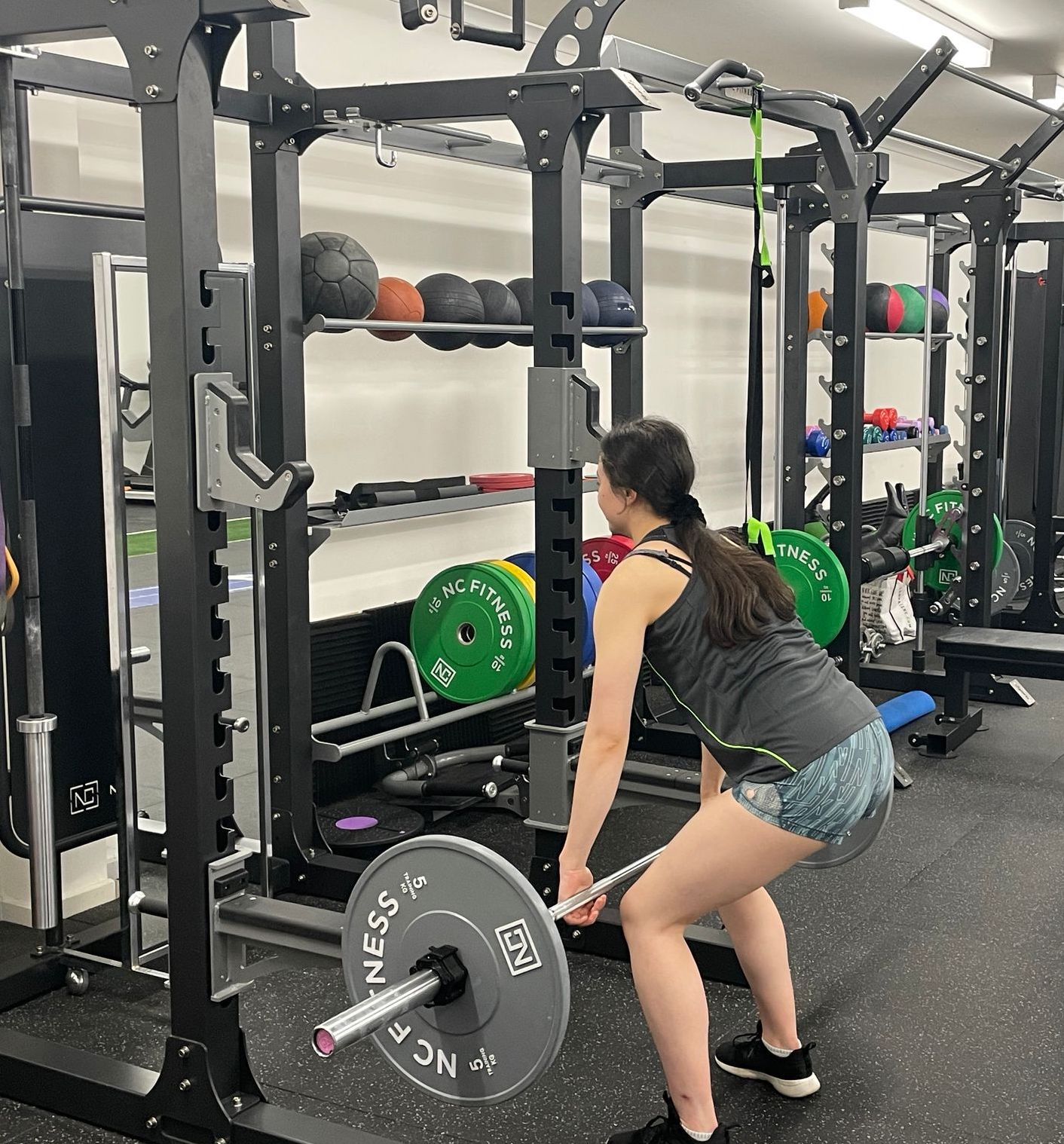
Glutes – The Powerhouse of Your Body
It may not feel like it for some, but the gluteus max (AKA the bottom) is the biggest and one of the most powerful muscles in the body.
Why are the glutes so important?
The glutes are responsible for;
- Keeping our torso erect
- Controlling the stability of the pelvis
- Projecting our bodies upright
- Keeping us forward
- Moving us side-to-side
Plenty of important functions, right?
So, why don’t we all have nice, big, strong behinds?
What muscles compensate when you have weak glutes?
Muscles that can overcompensate are your;
- quads
- hamstrings
- lower back
- other surrounding muscles
What happens to our bums when we sit all day at work?
Our bodies do not actually recruit every muscle fibre to complete its daily functions.
We only activate the muscle fibres that we “need”.
So, when we sit on our bums at work, we are not needing our glute muscle fibres firing, so they go into power-saving mode.
When in power-saving mode, our glutes become weaker and lack motor control. This is how well they respond to the brain’s commands.
How to tell if your glutes are weak
Signs that you have weak glutes are;
- Swaying hips
- Twisting of the torso
- Flicking legs
- Swinging arms
- Excessive use of your mid-back
- Excessive use of lower back
- Excessive use of hamstrings
- Excessive use of adductors
- Excessive use of hip rotators
- Excessive use of flexors
- Regular injuries
Causes of weak glutes
Another cause of weak glutes is the accumulation of trigger points or knots in the muscle.
This is because the knots shorten the muscle fibres which then inhibit the full force of the contraction.
When your glutes are not switched on, your body has to find another way to create the same movement.
Unfortunately, this means compensating by using other movements to make up for the lack of glute power. We usually see this with swaying hips, twisting the torso, flicking legs, swinging arms and excessive recruitment of other muscles such as your mid-back, lower back, hamstrings, adductors, hip rotators and flexors.
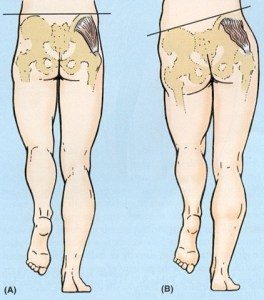
Running with weak glutes
So, just because you are running 40km a week, or you can squat 100kgs, doesn’t necessarily mean you are recruiting the right muscles.
You can just as easily be over-dominating with your quads, hamstrings, lower back or other surrounding muscles.
Think about it. When you are training glutes, do you pull up sore in your bottom the next day? Or are you feeling sore in other areas above, below and around your hips?
To help rectify your movement patterns and posture
To improve your glute strength, you need to do 2 things to help improve your movement patters and posture:
- Improve your stature
- Strengthen your core and your glutes
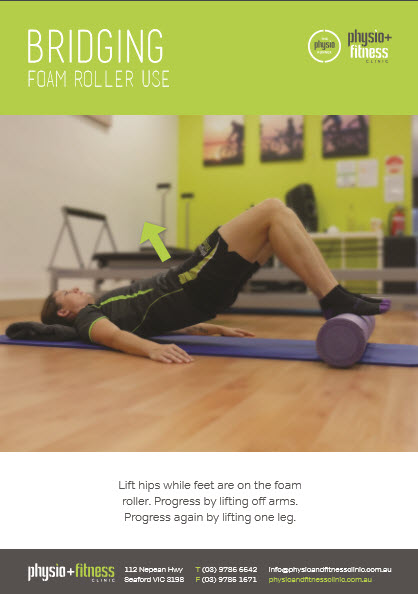
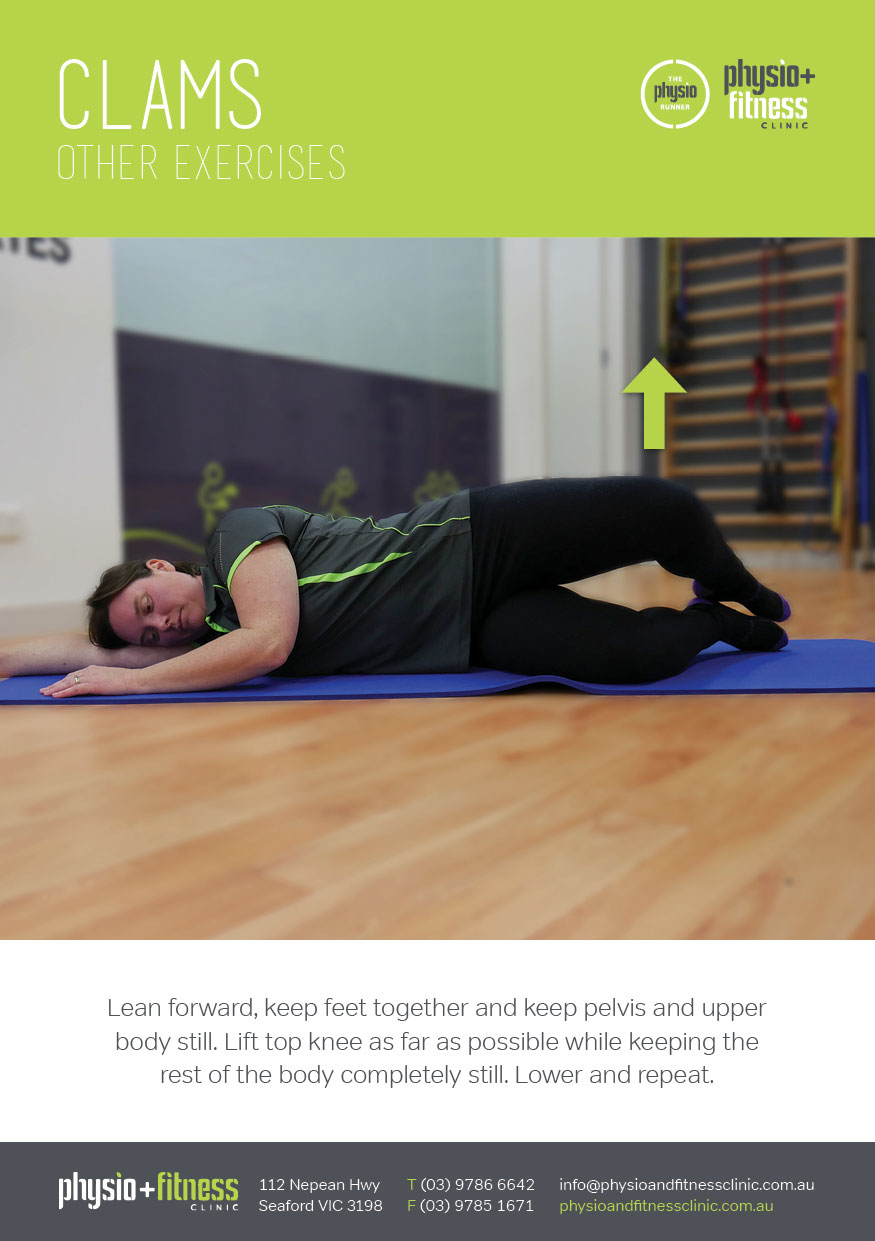
Below are 2 exercises you can do everyday to help correctly activate your glutes and strengthen your core…
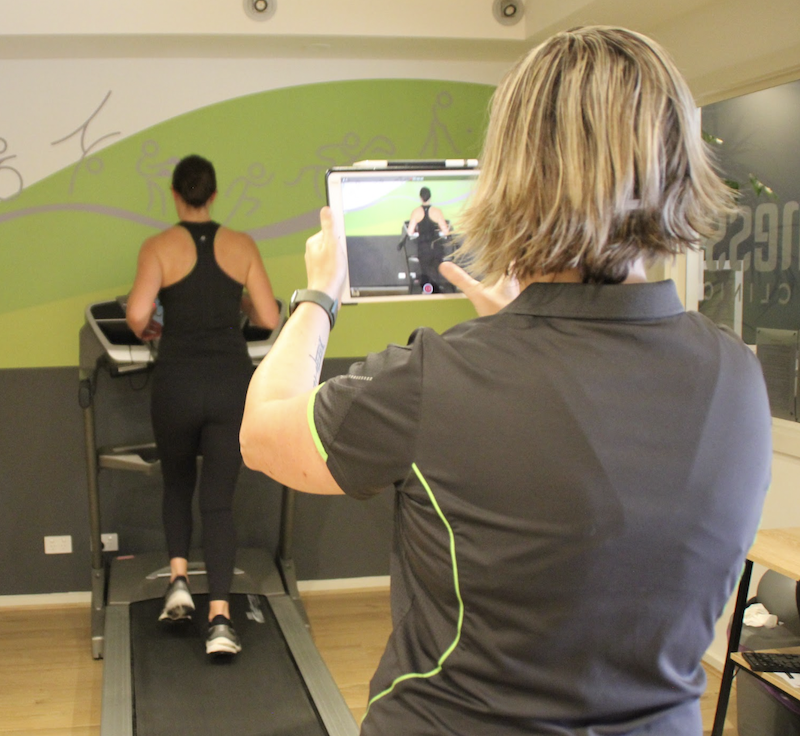
Exercises you can do every day to activate your glutes and strengthen your core
How much time does it take to improve glute strength?
Now remember, activating muscles isn’t always easy!
A study once showed that it took 1 hour per day of a single exercise focusing on the glutes to be effective in improving glute motor control and decreasing inhibition.
Okay, so an hour per day is pretty excessive! Be patient and persevere with your exercises over a longer period. It might take you a little longer, but you will get there
Rome wasn’t built in a day.
Keep on, keeping on. Eventually, you will have that all-sacred booty burn!
Only then, will you be able to increase your glute strength…and perhaps, prevail towards that strong, powerful, bootylicious peach that not only looks great in your jeans, but will prevent you from all kinds of injuries and chronic pains!
Written by ALLI JENNINGS
Dip. Remedial massage therapy
Av. dip. Myotherapy
Alli has a special interest in lower back/hip pain.
Acute injury management: Forget RICER, its time for PEACE & LOVE
Oh no, you just rolled your ankle. Quickly, grab the ice! Or, based recent advances in science, maybe don’t… For years we have been told to manage an acute injury with RICER - Rest, Ice, Compression, Elevation and (if appropriate) Referral. While at the time it was...
Myofascial Dry Needling to Prevent Headaches
Most people will have experienced a headache at some point in their lives. In fact 4.9 million Australians were suffering migraines in 2018. Headaches can come with a range of symptoms and have many classifications. The most common types of headaches include tension...
Is there a genetic basis for running performance?
The age old debate over nature vs nurture will always be a focus with development and potential for many aspects of human performance. In athletes it is well accepted that those who come from a family history of tall, strong people, will often create tall, strong...