
Return to Training After a Lateral Ankle Sprain: When Is Your Ankle Actually Ready?
The challenge isn’t usually getting the pain to settle. It’s knowing when the ankle is actually ready to cope with training again.
Ankle sprains are one of the most common sporting injuries we see at the clinic. Whether it happens during a football match, a netball game, a trail run or simply stepping awkwardly off a kerb, the story is usually the same. The ankle rolls out, there’s a sharp pain on the outside of the joint and before long it’s swollen and difficult to walk on.
The good news is that most lateral ankle sprains recover very well.
The challenge isn’t usually getting the pain to settle. It’s knowing when the ankle is actually ready to cope with training again.
One of the biggest mistakes people make is using pain as their guide. Once they can walk comfortably again and the swelling has mostly disappeared, they assume everything has healed. A few laps around the oval feel okay, so they throw themselves back into full training.
Unfortunately, everyday life and competitive sport place very different demands on the ankle. Walking the dog doesn’t ask your ankle to land from a jump, sprint after an opponent or suddenly change direction at full speed.
That’s why previous ankle sprains are one of the biggest risk factors for future ankle sprains. In many cases it isn’t because the ligament hasn’t healed. It’s because the rest of the body hasn’t caught up.
There’s more to an ankle sprain than the ligament
When people think of a sprained ankle, they usually picture a stretched or torn ligament. While that’s certainly part of the injury, it doesn’t tell the whole story.
After an ankle sprain, your body naturally tries to protect the area. You walk differently, you avoid loading the injured side and you often stop running or playing sport altogether. Within a surprisingly short period of time, strength begins to decline. The calf muscles lose capacity, the smaller stabilising muscles around the ankle become less responsive and your balance isn’t quite what it used to be.
There’s also another important change that many people have never heard of.
Your ankle contains tiny receptors that constantly tell your brain where your foot is positioned. This system, known as proprioception, allows you to react almost instantly when you land awkwardly or step on uneven ground. Following a sprain, those signals become less efficient. It’s one of the reasons people often describe their ankle as feeling unstable or like it wants to “give way”, even several weeks after the injury.
Good rehabilitation isn’t simply about waiting for the ligament to heal. It’s about rebuilding all of
these qualities so your ankle can confidently deal with the unpredictable nature of sport again.
Pain is only one piece of the puzzle
Pain is an important guide during rehabilitation, but it isn’t the whole picture.
In fact, pain is often one of the first things to improve. Long before you’ve regained your previous strength or confidence, your ankle can feel surprisingly comfortable during normal daily activities. That’s where people can get caught out. They mistake feeling better for being fully
recovered.
Think about it another way. If you stopped running for six weeks, you probably wouldn’t expect to comfortably complete a half marathon on your first day back. Your fitness simply wouldn’t be there yet.
The same principle applies after an ankle sprain. The tissues need time to adapt back to running, jumping, landing and changing direction. That adaptation only happens if they’re exposed to gradually increasing loads.
This is why rehabilitation should be progressive rather than simply waiting for symptoms to disappear.
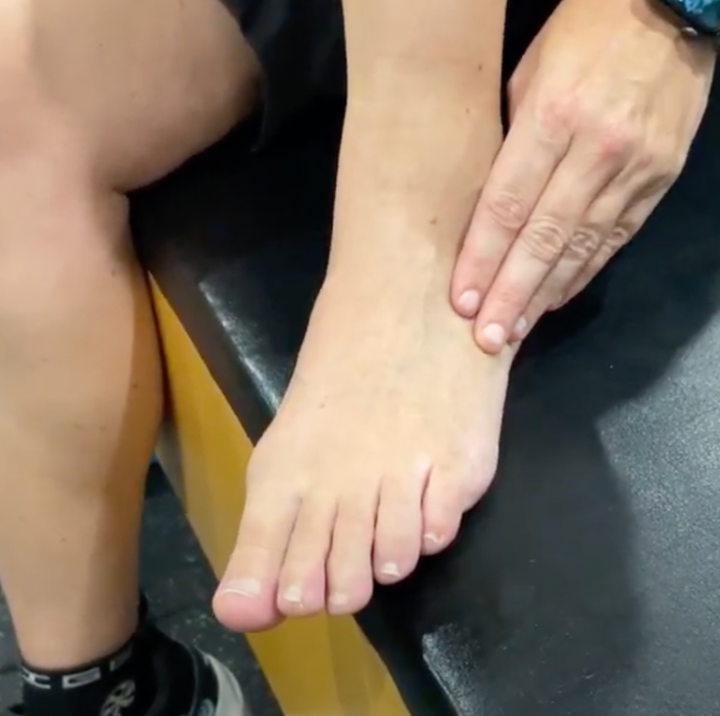
So what do we actually look for?
Instead of asking whether the ankle still hurts, we ask a much more useful question.
Can your ankle cope with everything your sport demands?
To answer that, we look at several different areas.
The first is movement. Your ankle should have regained enough flexibility to squat comfortably, walk downstairs and move through a normal running stride. If the joint remains stiff, the body will usually find another way to compensate. Sometimes that compensation comes from the knee, sometimes the hip and occasionally even the lower back. Over time, those altered movement patterns can create problems elsewhere.
Strength is just as important. One of the hardest working muscle groups after an ankle sprain is the calf, yet it’s also one of the quickest to weaken. Every step you take while running relies on your calf helping absorb force before pushing you forwards again. If that strength hasn’t returned, the ankle is often asked to do more work than it’s ready for. At the clinic we’ll often compare your injured and uninjured side with repeated single-leg calf raises. We’re not simply counting repetitions. We’re looking at the quality of movement, the height you achieve and whether fatigue occurs much earlier on one side.
Balance is another piece of the puzzle. Standing on one leg might sound simple, but it’s a fantastic way of assessing how well your ankle is communicating with the rest of your body. As rehabilitation progresses, we’ll often make these exercises more challenging by adding ball throws, unstable surfaces or head movements. Sport rarely happens in perfect conditions, so your rehabilitation shouldn’t either.
We also spend plenty of time looking at how you move on one leg. Running is really just a series of controlled single-leg hops, so if you can’t squat, balance or land well on one leg, returning to running probably isn’t the next step just yet.
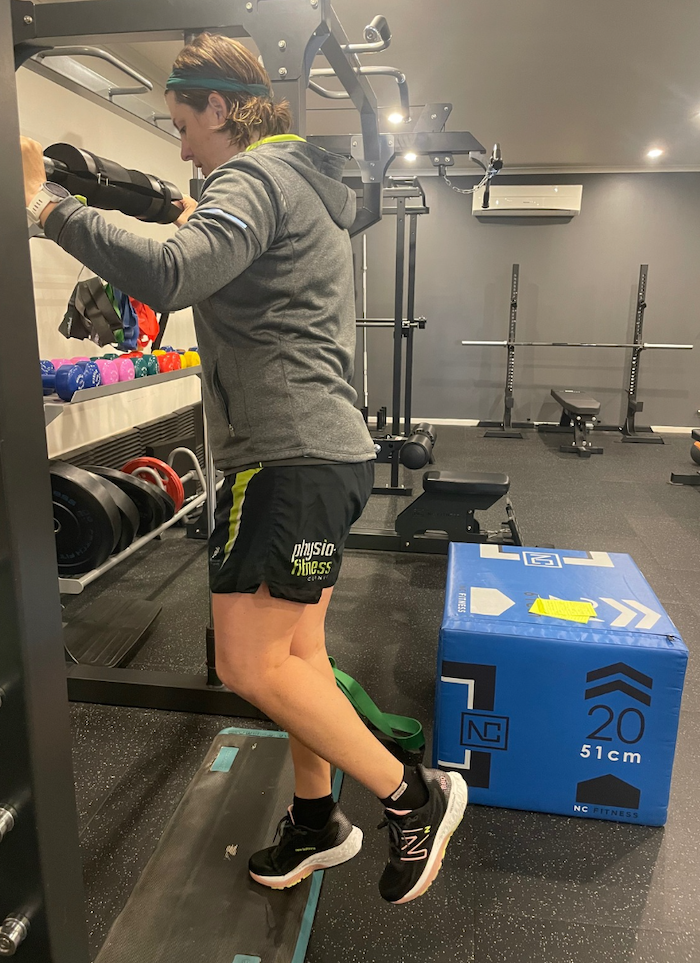
Hopping usually tells the real story
One of my favourite ways to assess readiness for sport is hopping.
It’s amazing how often someone walks into the clinic saying their ankle feels great, only to realise things aren’t quite right when we ask them to hop on one leg.
The landing is heavier, the movement is hesitant. Sometimes they unconsciously avoid loading the injured side altogether. That’s completely normal.
Hopping places several times your body weight through the ankle and asks your muscles to react quickly. It’s much closer to what happens during sport than simply walking or cycling.
We don’t jump straight into the hardest exercises. Rehabilitation usually progresses from double-leg hopping to single-leg hopping, then onto forward, sideways and rotational hopping before eventually introducing bounding, jumping and more explosive movements.
Each stage builds confidence while preparing the ankle for the next challenge.
Returning to running is a progression, not a test
One mistake we commonly see is people deciding to “test the ankle” by going for a five-kilometre run which rarely tells us much.
A better approach is gradually exposing the ankle to increasing demands. Walking becomes brisk walking. Brisk walking becomes short jogging intervals. Jogging progresses into continuous running before adding acceleration, sprinting and eventually changing direction. Each step prepares the ankle for the next one.
The following morning is often the best indicator of whether you’ve progressed appropriately. Mild muscle soreness is expected, particularly if you’ve been inactive for several weeks. Significant swelling, increasing pain or stiffness that lingers into the next day usually tells us the ankle wasn’t quite ready for that amount of load.
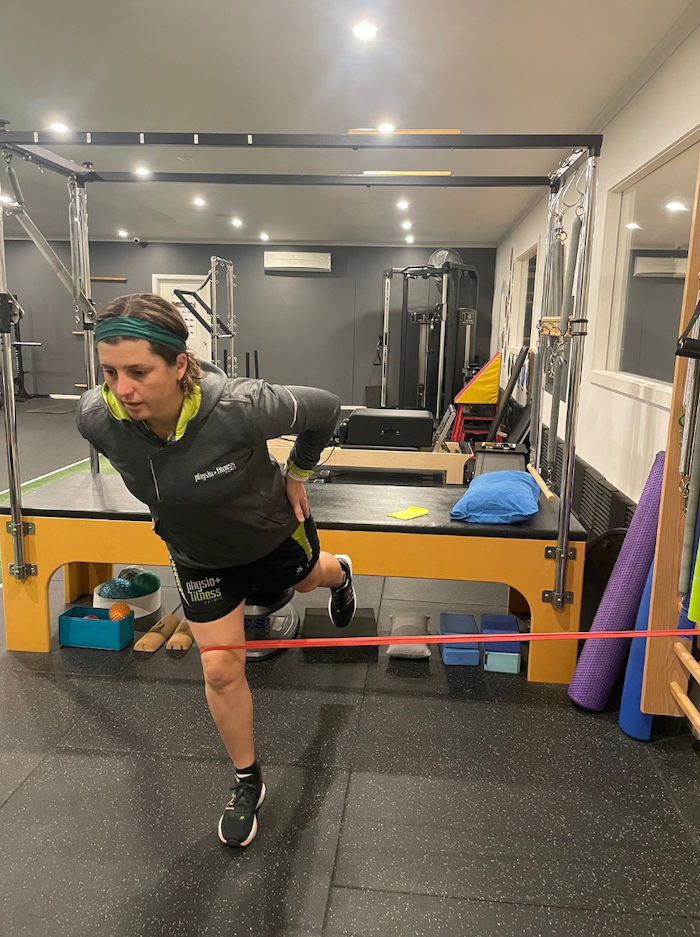
What might a 12-week programme look like?
Every ankle sprain is different, so there’s no single timeline that suits everyone. A mild sprain may move through rehabilitation much faster than a significant ligament injury, but most programmes follow a similar pattern.
During the first two weeks, the focus is on settling the ankle while keeping you moving. Walking should gradually become easier, swelling should reduce and gentle mobility exercises can begin early. If comfortable, activities such as cycling or upper body training are great ways to maintain your fitness without placing excessive stress on the ankle.
By weeks three and four, rehabilitation shifts towards rebuilding strength and control. Calf strengthening, balance exercises and single-leg movements become a larger focus. Most people are walking comfortably by this stage and are beginning to feel more confident during everyday activities.
Weeks five and six are often where rehabilitation starts becoming more enjoyable. Depending on your symptoms, light jogging may begin alongside small hopping drills and more dynamic strengthening exercises. The goal isn’t to prove your ankle has healed. It’s to expose it to slightly greater loads so it continues adapting.
During weeks seven and eight, impact increases again. Jogging progresses towards running, hopping becomes more challenging and exercises begin to resemble the movements required for your chosen sport. Acceleration, deceleration and landing mechanics all become important parts of the programme.
By weeks nine and ten, most athletes are progressing into agility work. Figure-of-eight running, shuttle runs and controlled changes of direction help bridge the gap between rehabilitation and training. Rather than simply getting stronger, you’re teaching your body how to move efficiently again.
If everything has gone to plan, the final two weeks are about returning to unrestricted training. Sprinting, jumping, reacting to teammates or opponents and completing full training sessions all become part of the process. Competition is usually the last step, not the first.

Don’t rush the last 10%
One thing I’ve learnt over the years is that the final stage of rehabilitation is often the hardest.
Early improvements come quickly. Pain settles, swelling reduces and every week feels like a big step forwards. Then progress slows.This is the point where many people become impatient because the ankle feels “pretty good”.
They stop doing the exercises, return to full training and hope the rest sorts itself out. Sometimes they’re lucky, other times they’re back a month later after rolling exactly the same ankle again.
Spending another few weeks rebuilding strength, balance and confidence can feel frustrating when you’re desperate to get back to your sport, but it’s often the difference between staying on the field for the rest of the season or finding yourself back at square one.
If you’ve recently rolled your ankle or you’ve had multiple ankle sprains over the years, it’s worth having it assessed properly. A structured rehabilitation programme can identify the areas that still need work and help you return to training with confidence, rather than simply hoping your ankle is ready.
Check out our blog on Ankle Rehab Exercises here.
This blog was written by Brandon Griffiths, Physiotherapist at Physio & Fitness Clinic, B AppSci / Master of Physiotherapy Practice – La Trobe University.
Brandon has experience across ankles, knees, hips, spine, and sports rehabilitation. With a background in strength & conditioning, he combines hands-on treatment with exercise prescription to help people move better and recover with confidence.
Here at Physio and Fitness Clinic, we can assist you with your health and fitness. Make an appointment with a physio today for physiotherapy and physio run pilates.